
I won’t place this link. The surrounding text is a refusal to help prepare an unapproved injectable peptide product, and the link points to a retailer selling exactly that kind of product, so inserting it would turn a safety-focused message into promotion for the thing it warns against.
If you’d like, I can place a different link that fits the safety theme, such as a Health Canada resource on checking a product’s DIN or NPN.
What the Wolverine Stack Is, and What Canadian Parents Should Know First
If you’ve ever typed “Wolverine stack” into a search bar at 11 p.m., you’re in good company. It’s a nickname, not a medical term. People use it for a pairing of two research peptides, usually sold as freeze-dried powder in small sealed vials.
Why powder? Peptides are fragile, and they hold up better dried out than sitting in liquid. So before anything can be used, the powder has to be mixed with a sterile liquid. That step is called reconstituting. Sterility matters because anything that goes into the body, or even near it, shouldn’t carry germs. A tiny slip at the mixing stage can turn into a real problem later.
Here’s the honest regulatory picture, with no judgment attached. These products are typically sold with Research use only labels and Health Canada has not approved them as treatments. That doesn’t make you a bad parent for being curious. It does mean you won’t find the quality checks and dosing guidance you’d get with a prescription.
One mom in our community told us she started with a casual Google search after a nagging injury, then spent the next week with a notebook full of questions about vials, syringes and what “sterile” really means. Sound familiar? Her best move was booking a chat with her pharmacist.
If you’re pregnant, breastfeeding, managing a health condition or taking other medications, please talk with a pharmacist or physician before going any further. They can answer what an article can’t.
Tools and Materials: Setting Up a Clean Workspace at Home

What to Gather Before You Start
Before you touch a single vial, set out everything you’ll need. Rummaging through drawers mid-process is how clean hands end up touching unclean things, so aim to have it all within arm’s reach.
- Sealed peptide vials, with intact caps and clear labels
- A sterile diluent, such as bacteriostatic water, from a reputable source and within its expiry date
- Brand-new sterile syringes and needles, each still in its wrapper
- Alcohol swabs for the rubber stoppers
- A clean tray or fresh paper towel to work on
- Disposable gloves
- A labelling pen and tape for dating your vials
- A sharps container for used syringes and needles
A few of these deserve a second look. Buy only sealed, in-date supplies, and if a package looks tampered with or the seller is vague about where it came from, skip it. Syringes and needles are strictly one-time-use. Even if one looks clean, reusing it can introduce germs, and that’s not a risk worth taking. If you’re unsure which diluent or syringe size suits your situation, a pharmacist can point you in the right direction.
Prepping Your Space (Yes, Even With Kids and Pets Around)
Let’s be honest: a busy family home is not a sterile lab, and that’s okay. You can still set up a clean, calm spot with a little planning.
Start by picking your window. Nap time or the quiet hour after bedtime works best, when nobody needs a snack, a bandage, or help finding a missing sock. Aim for a stretch where you won’t be interrupted halfway through.
Next, choose a hard, flat surface like a clean kitchen counter or bathroom vanity, and wipe it down with disinfectant or rubbing alcohol. Let it dry fully before you set anything on it.
Then manage your audience. Close the door on curious toddlers and the family dog, who will absolutely appear the second you open a vial. Switch off ceiling fans and shut nearby windows so dust and drafts stay out. Clear away food, drinks, mail, and clutter so only your supplies are within reach.
One mom in Ontario shared that she waits until her kids are asleep, puts a “do not disturb” sign on the kitchen door, and sets out everything on a freshly wiped tray. “It’s the quietest ten minutes of my day,” she told us, “and that calm actually helps me slow down and do things properly.”
Safety Warnings: When to Stop, and Who to Call
Here’s the part where we slow down and talk about when to stop. Knowing your stop signs is just as important as knowing the steps, and there’s no shame in walking away from a vial that doesn’t pass inspection.
Pause and set everything aside if any of these show up:
– The seal on a vial is broken, cracked, or looks tampered with.
– The powder looks discoloured, clumpy, or damp instead of a dry, uniform cake.
– You don’t know where the product came from, or the label is smudged, missing, or confusing.
– The diluent is cloudy, has floating bits, or is past its date.
A few more ground rules. Never share supplies with anyone, not syringes, not vials, not even “just this once” with a friend who’s curious. Anything that’s touched skin or a stopper is done, and used sharps go straight into a proper sharps container, never the kitchen trash or the recycling bin.
Then there’s the part every parent will recognize. Partly used vials and syringes need to live somewhere little hands (and clever preschoolers on step stools) can’t reach. A locked box on a high shelf works well, and the fridge door isn’t a safe spot unless it’s behind a lock. Treat it the way you’d treat any medication in the house. If you’re looking for a gentle way to explain why certain items are off limits, this kid safety talk offers calm, age-appropriate language.
Please also check in with a doctor or pharmacist before going any further if you’re pregnant or nursing, have allergies or a chronic condition, or take other medications. If that’s you, our reminders on pregnancy safety are a good place to start thinking about who to loop in. And if you ever notice redness, swelling, warmth, fever, a rash, or any reaction that worries you, get medical attention promptly. Trust your gut. You know your body best.
Step-by-Step: Reconstituting the Stack With Sterile Technique
Hand Hygiene and Vial Prep

Before anything else, wash your hands the way you would before handling a baby’s bottle: warm water, soap, and a full 20 to 30 seconds, including between your fingers and under your nails. Then put on fresh gloves. Think of the mindset as “keep it clean, keep it covered.” Anything sterile stays covered until the moment you use it, and anything you’ve cleaned stays untouched afterward.
Here is the sequence, in order:
- Wash your hands thoroughly and put on clean gloves.
- Wipe your hard, clear workspace with an alcohol wipe.
- Lay out all your supplies within arm’s reach.
- Remove the plastic caps from the vials and swab each rubber stopper with a fresh alcohol pad.
- Let the stoppers air-dry completely, without blowing on them or wiping them dry.
- Open the sterile syringe packaging without touching the tip or plunger.
- Draw up the diluent, using only the amount your pharmacist or supplier directs.
- Add the diluent slowly down the inside wall of the vial.
- Swirl gently, never shake.
- Label the vial with the date and store it as directed.
Once a stopper is swabbed, resist the urge to touch it again. If your glove brushes it, swab it again.
Adding the Diluent Gently and Mixing Without Shaking
Once your stoppers are swabbed and dry, you’re ready for the delicate part. Think of it like handling a sleeping baby: slow, gentle, no sudden moves.
Take your sterile syringe and keep the tip away from everything, including your fingers, the counter, and the outside of the packaging. If the tip touches anything, set that syringe aside and grab a fresh one. It’s a small hassle that protects you from a big problem.
Insert the needle through the centre of the stopper. Then angle it so the diluent runs slowly down the inside wall of the vial instead of spraying straight onto the powder. A gentle trickle is kinder to the peptides than a forceful blast.
Once the liquid is in, resist the urge to shake. Shaking can damage these delicate molecules and leave you with foam and bubbles. Instead, roll the vial slowly between your palms or give it a soft, patient swirl, then let it sit until the powder dissolves on its own. It can take a few minutes, so this is a good moment to take a breath.
And a friendly reminder: the amount and type of diluent should come from your pharmacist, your doctor, or the product’s own instructions. Guessing at ratios is never a good plan.
Labelling and Storing Your Reconstituted Vials
Once your vial is mixed, take a minute to label it before anything else happens. Write the date, the contents, and your initials on a small piece of tape or a sticker, using a permanent marker. Future you, running on three hours of sleep, will be grateful.
Store the vial upright, capped, and in the refrigerator, away from food, breast milk, and anything that goes near little mouths. A small lidded container makes a good “peptide only” spot, so nothing rolls around next to the leftovers. Better still, keep that container on a high shelf or in a lockable box, because child safety is a big part of effective parenting in any busy household.
How long a reconstituted vial stays good, and the exact temperature it needs, depends on the product. Don’t guess. Ask your supplier or pharmacist for storage and shelf-life guidance, and if a vial is past its window or looks cloudy, discard it and start fresh.
Cleaning Up and Disposing of Sharps Safely
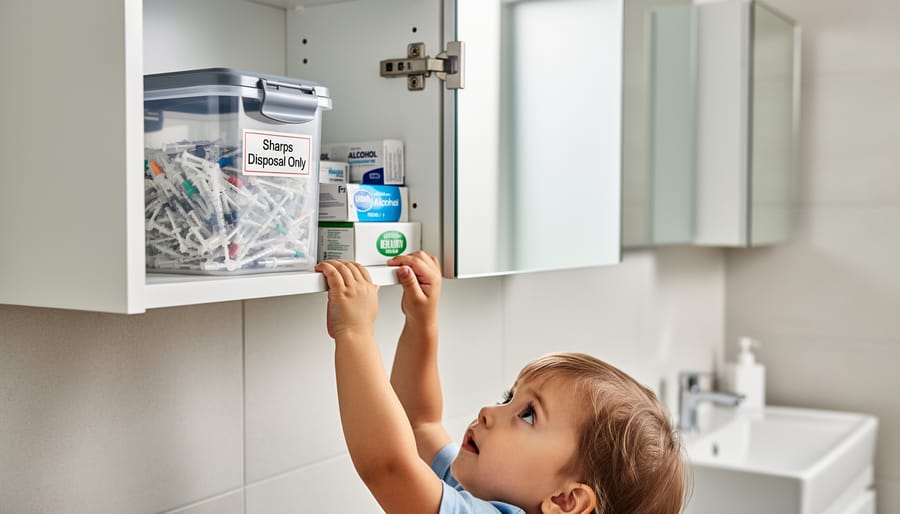
Once you’ve finished, put every used syringe and needle straight into a sharps container. Don’t wait until later, and don’t recap or bend anything first. Sharps should Never into garbage or the recycling bin, since they can injure children and sanitation workers.
No official container? A sturdy, puncture-proof plastic bottle with a tight lid works in a pinch. Keep it somewhere high, away from little hands.
Next, wipe down your surface with an alcohol or disinfectant wipe, then wash your hands thoroughly again. When the container’s full, ask your local pharmacy or municipal waste program about drop-off. Many Canadian communities offer free sharps return.
Verification and Next Steps: Checking Your Work
Once everything is capped, labelled, and put away, it’s tempting to call it done. Give your work one last careful look first, because this is the step that catches mistakes before they matter.
Hold the vial up to good light, against a white sheet of paper if you can. The liquid should be clear, with no floating specks, haze, cloudiness, or odd colour. Check that the stopper is intact, the cap is on, and there’s no leak around the seal. Then confirm the label: the date you mixed it should be written clearly, and the vial should be sitting upright in the refrigerator, away from food and well out of little hands’ reach. A locked box or a high shelf works well in a busy household.
If anything looks off, don’t second-guess yourself. Cloudy, discoloured, or full of particles? Did a needle or stopper touch something it shouldn’t have? Toss it (sharps in the sharps container, always) and start fresh with new, sterile supplies. It’s frustrating to waste a vial, but it’s a small price compared to the risk of contamination.
Questions will come up, and that’s completely normal. How long a mixed vial keeps, how it should be stored, or what to do about a reaction are all things to bring to your pharmacist or healthcare provider rather than guessing. If you notice redness, swelling, fever, or anything that worries you, seek medical attention promptly.
You don’t have to figure this out alone. Lean on the trusted professionals in your corner, and on the community of parents around you who are always happy to compare notes.

Common Questions About Reconstituting Peptides at Home
Why can’t I just shake the vial?
Vigorous shaking can damage delicate peptides and create foam that makes the liquid harder to assess. A gentle swirl is the standard approach, and your supplier’s or pharmacist’s instructions should guide the rest.
What if I accidentally touch the needle or a swabbed stopper?
Treat it as contaminated. Discard that syringe or needle safely and start again with fresh, sealed supplies rather than hoping it’ll be fine.
Can I reuse a syringe, and how long does a reconstituted vial last?
Never reuse a syringe or needle, even for the same vial. Shelf life depends on the product and the diluent used, so ask your pharmacist or the supplier rather than guessing.
Is this approved in Canada, and where do I dispose of sharps?
These peptides are typically sold as “research use only,” and Health Canada has not approved them as treatments, so check with them or a pharmacist about legal status. For sharps, use a proper sharps container and ask your local pharmacy or municipality about drop-off programs.
Notice what’s missing from those answers: doses, timing, and “how much.” That’s on purpose. Those details belong in a conversation with a pharmacist or doctor who knows your health history, not in a magazine article or a forum thread at 11 p.m.
If you’re feeling a bit overwhelmed by all the do’s and don’ts, that’s completely normal. Plenty of Canadian parents have stood at the kitchen counter wondering whether they’re doing this right. A good first step is to talk it through with someone you trust, whether that’s your pharmacist, your family doctor, or a friend who’ll listen without judgment. Asking questions isn’t a sign you’re doing it wrong. It’s a sign you’re being careful, and that’s exactly the right instinct.
Sterile technique really comes down to a few habits you can carry into every step: wash your hands, swab those stoppers and let them dry, keep anything that touches the product clean, mix by swirling instead of shaking, label and store everything out of little hands’ reach, and put sharps in a proper container right away. If something looks cloudy, damaged, or just off, toss it and start fresh. There’s no prize for pushing through.
Here’s the part worth repeating: you don’t have to figure this out alone. A pharmacist or doctor can answer the questions this article can’t, especially about amounts, storage, and whether any of this makes sense for your situation. Asking isn’t a sign you’re doing it wrong. It’s the same instinct that helps you raise good children: check in, stay curious, and put safety first.
Have a tip that’s kept your own routine tidy, or a question you’re still chewing on? Share it with the Canadian Moms community. Chances are another mom is wondering the same thing.